Arrival
Choose the most convenient Barcelona station and confirm that the train stops at Sitges. From the airport, plan the change at El Prat and the transfer from T1 to T2 where necessary.



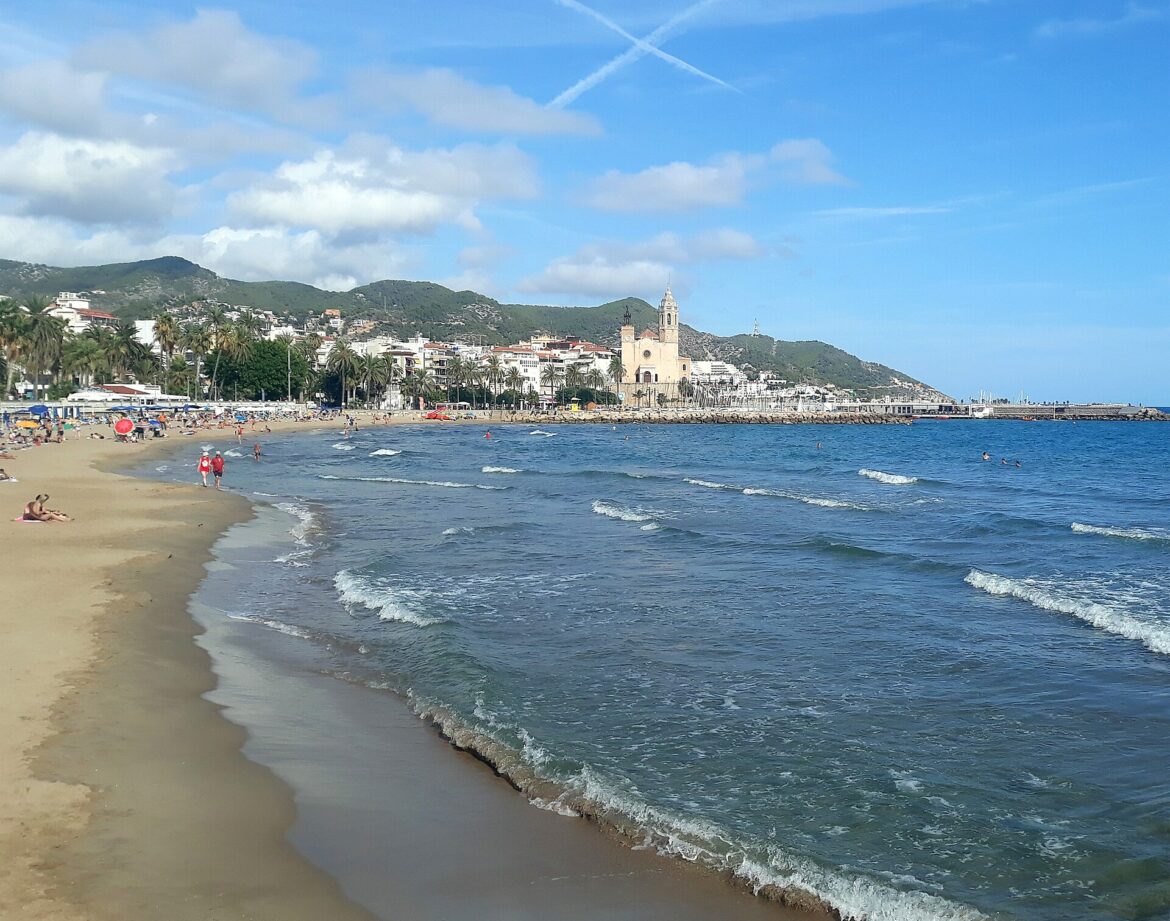
Sitges combines town beaches, a compact historic centre and museums beside the sea. For a day trip from Barcelona, arrive by train, explore the area around the church and the Racó de la Calma, then choose a beach for the afternoon. The R2 Sud line serves Sitges; travelling by rail from the airport requires a change at El Prat de Llobregat. Staying for one or two nights gives you time for more culture and walks without having to return to Barcelona.
Sitges works best when you first decide what kind of day you want: a beach visit with a short walk through town, museums followed by a leisurely lunch, or a break with time for both. The church overlooking the sea visually brings these experiences together, but carrying towels through exhibition rooms or walking the entire promenade with tired children can complicate a seemingly simple plan.
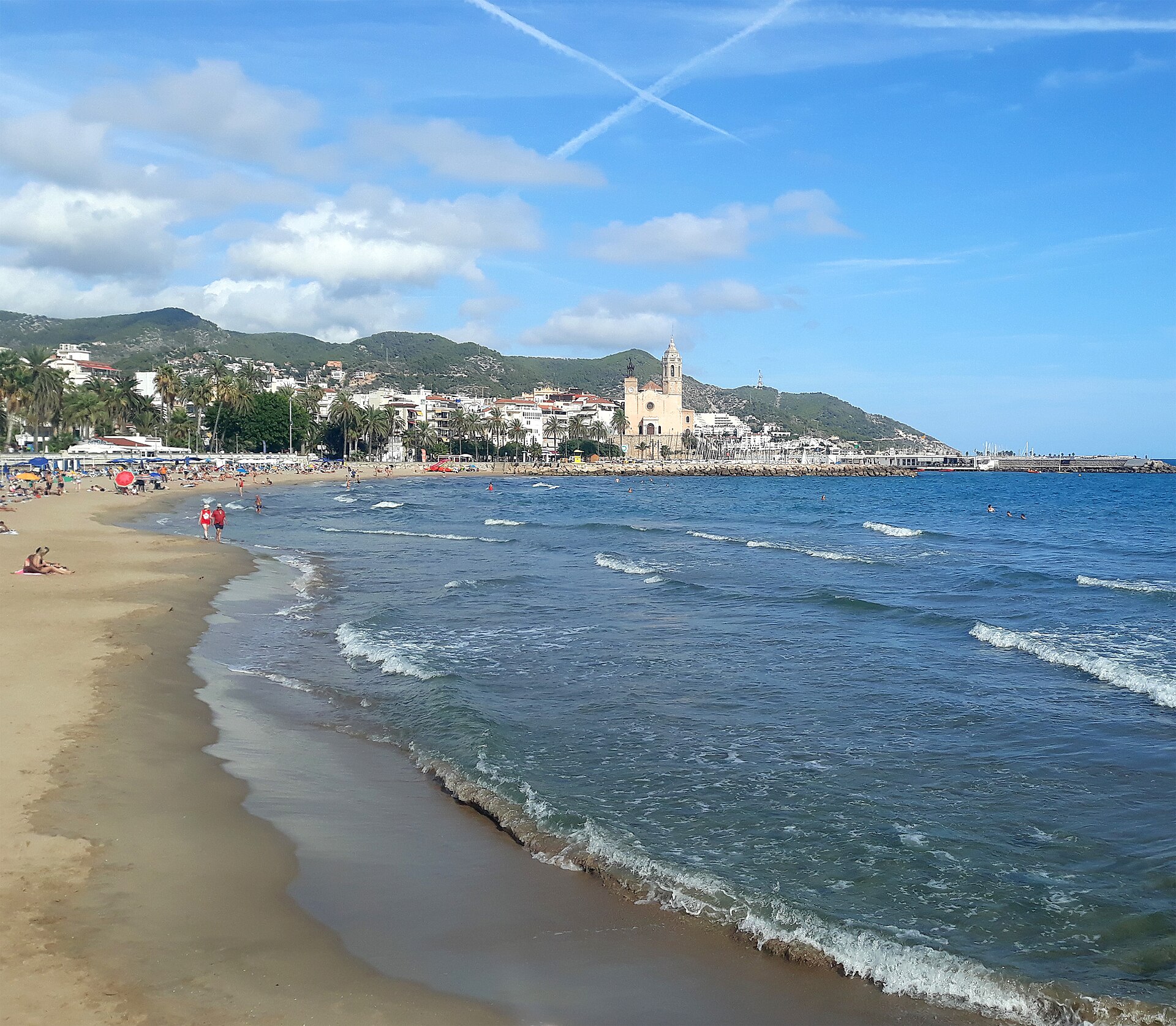
Sitges lies on the Garraf coast, southwest of Barcelona. It is not part of the Costa Brava. The railway station gives you access to the town centre, while the church of Sant Bartomeu i Santa Tecla is your landmark by the sea. Plan your first walk through the centre between these two points, without immediately heading for the most distant beach.
On the official Sitges tourist map, locate the station, the church, Sant Sebastià and the Passeig de la Ribera. Sant Sebastià lies east of the old town; Ribera and the promenade continuing towards Vinyet are on the other side. This division helps you put together a continuous route.
Add your accommodation address if you are staying overnight. A listing may use the name Sitges for a location that involves more walking than you expected. Measure the route along the streets, including the section between the station and the coast, rather than relying solely on the straight-line distance to the sea.
The beach at Sant Sebastià is beside the traditional maritime neighbourhood, with views of the church from the sand. It is a sensible choice if you are visiting the museums and want to stay in that part of Sitges, without crossing the built-up waterfront in search of another beach.
For a group with different interests, agree on a meeting point on the promenade: anyone who wants to spend longer exploring the museums can rejoin those who stayed on the sand. The short distance makes splitting up easy, although the size of the beach calls for realistic expectations about available space on busy days.
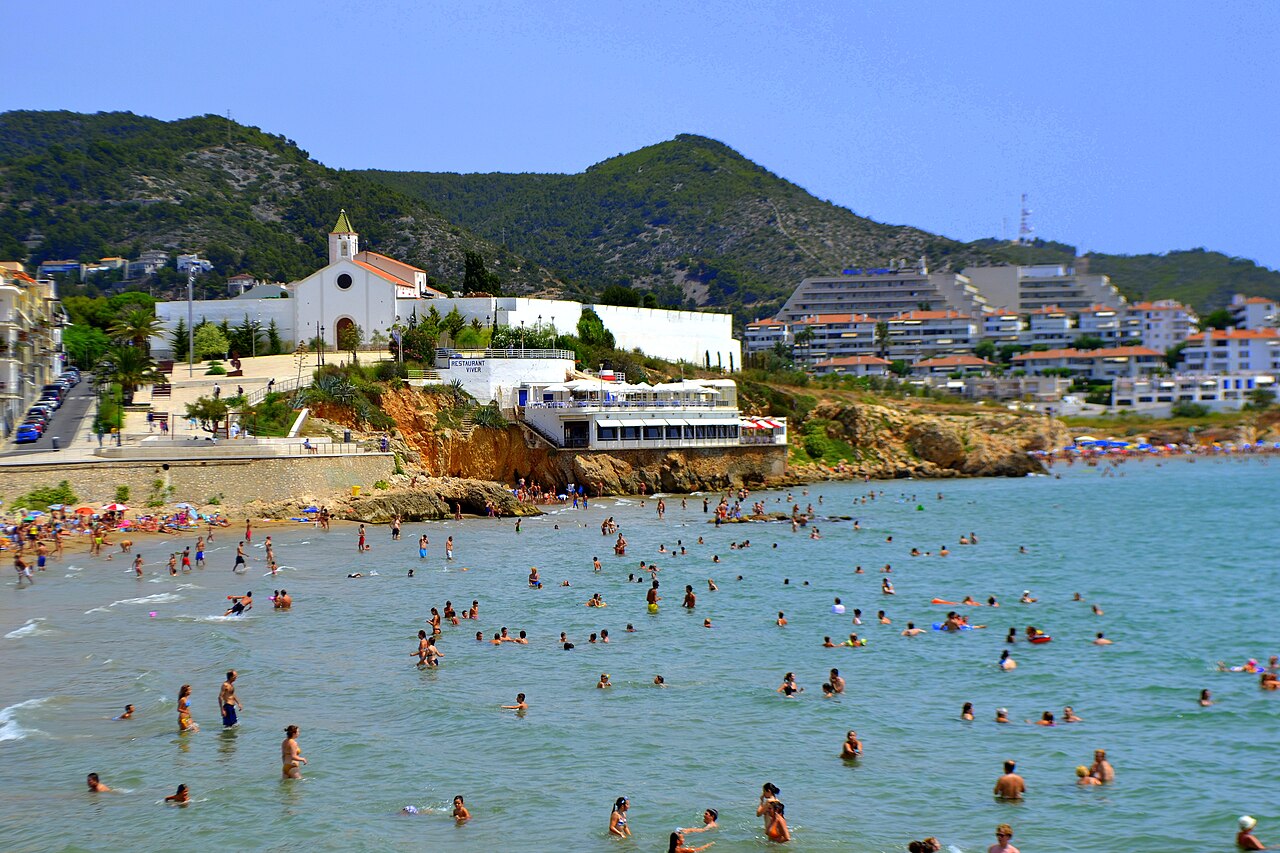
Ribera suits a first visit focused on the central waterfront. Estanyol takes the walk further towards Vinyet and may make more sense if you are staying on that side of town. The official Estanyol beach information places the beach in front of the neighbourhood and describes its access points.
Your plans for the day should determine whether you stay near the centre or walk further. If you still need to return to the station, save some energy for that journey. If you are staying near Estanyol, using the nearby beach saves travel and makes it easier to return to your room for a rest or a change of clothes.
Naturism is practised at Balmins, as noted in the official Sitges tourism press kit. Choose it with that in mind and respect other beachgoers’ privacy. There is no need to turn every beach into an essential stop: add this area when you have time to walk and feel like a change of scene.
Whichever you choose, check the municipal beach information and the signs on site. Services listed on an information page are not guaranteed to operate all year. If you need assisted bathing, confirm availability and the specific access arrangements in advance, rather than assuming they exist simply because there is a boardwalk.
Start outside the church of Sant Bartomeu i Santa Tecla and take in how the building relates to the waterfront. Then head into the old town streets and continue to the Racó de la Calma. This route gives you a feel for the town before you settle on the beach and avoids leaving all your walking until the end of the day.
For photographs, alternate a view of the church from the promenade with details of the streets and façades. You do not need to repeat the same perspective at every stop. Keep steps and doorways clear: people also live in and pass through the centre, particularly the narrow streets around the museums.
The Museu del Cau Ferrat began as Santiago Rusiñol’s home and workshop in 1893. Its combination of paintings, wrought iron, ceramics and other objects helps explain an approach to artistic creation that spanned several techniques. It is particularly rewarding if you enjoy interiors and collections with a distinctive personality.
Inside the museum, choose a few groups of objects to look at closely instead of trying to memorise every name. With children, looking for different materials can make the visit more tangible: identifying glass, metal and paintings provides a simple thread to follow, without needing a long explanation in every room.
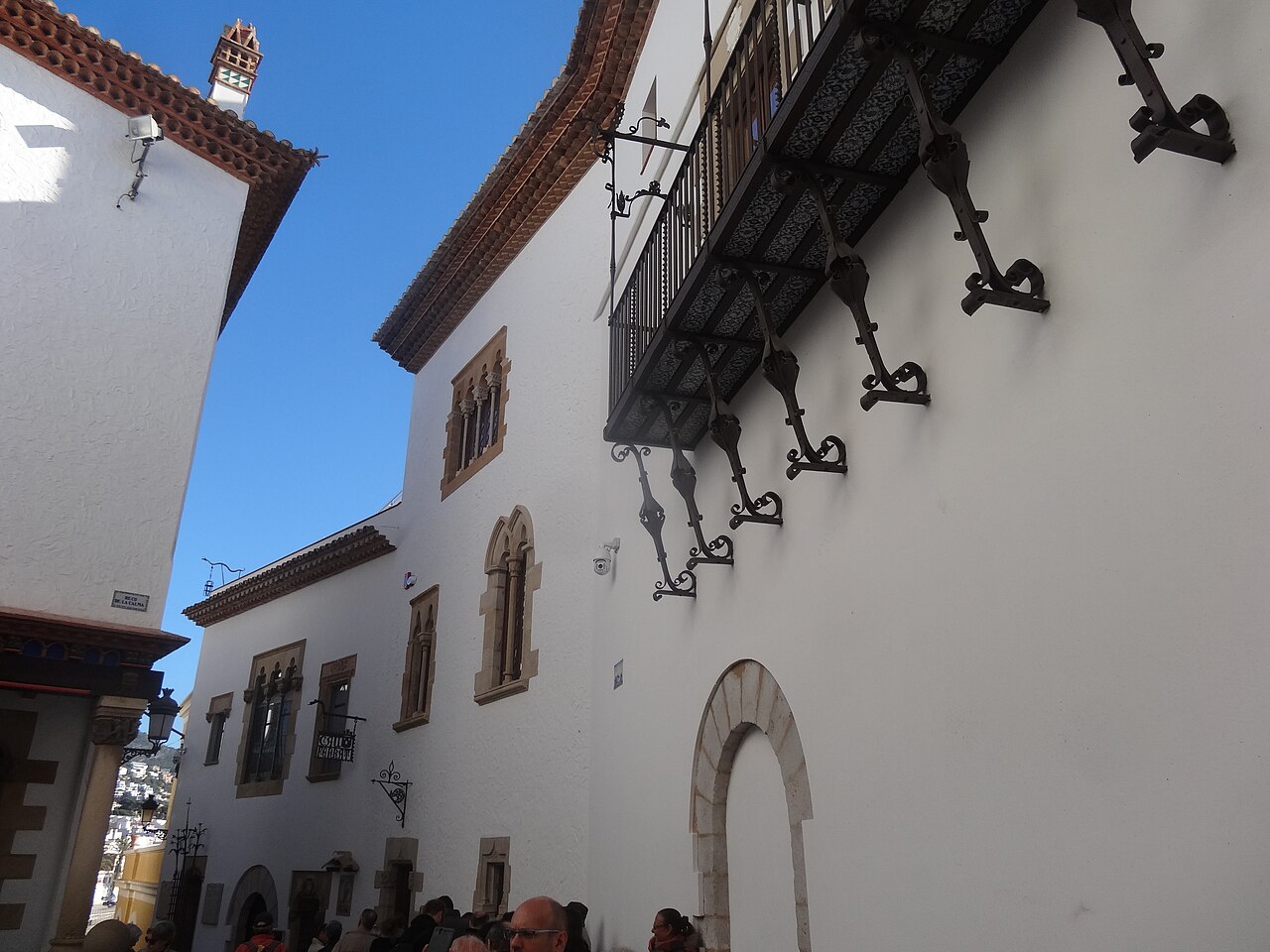
The Museu de Maricel and the Palau de Maricel are separate venues within the programme of the Museus de Sitges. Check the name on your booking: wanting to see the palace does not mean that any ticket containing the word Maricel includes your intended visit. The palace has guided tours on its own schedule.
Check exceptional closures as well. The official information lists 11 September among the museums’ closed dates; if your trip falls around then, plan your cultural visits for another day. Booking transport first and only discovering the closure afterwards can leave a cultural itinerary without its main visit.
Affiliate links: we may earn a commission at no extra cost to you.
The official guidance on reaching Sitges by train lists the R2 Sud line and Barcelona-Sants, Passeig de Gràcia and Estació de França as departure stations in the city. Choose according to how close they are to your accommodation. Going to Sants first may add an unnecessary journey if you are already near another station on the route.
Before boarding, confirm that your chosen train stops at Sitges. Seeing R2 on a general sign is not enough. Check service notices and your specific journey on the day of travel; journey times published in a guide do not replace operational information. On the return journey, allow time to walk from the beach to the station and find the platform.
The R2 Nord airport connection serves T2. To continue to Sitges, take that train to El Prat de Llobregat and change to the R2 Sud towards Sitges. Do not continue into central Barcelona simply to change trains.
If you land at T1, first allow for the transfer between terminals described by Aena. Add time for collecting luggage, reaching the station and waiting for the second train. For a late arrival, check the last complete connection before choosing this option; the timetable for the first leg alone does not cover the whole journey.
With heavy luggage or several people, compare the rail journey with a road transfer suited to your arrival time. The useful measure is the total cost to your door, together with the effort involved in changing trains. If you only want to visit the centre and town beaches, a car also brings the task of finding parking.
Morning: arrive by train and walk through the centre to the church. Explore the Racó de la Calma and make your chosen cultural visit, provided it is open. As a planning allowance, set aside the morning for this part; do not book an early lunch if you still intend to go inside the museums.
Lunch: stay in the area where you finished your visit. Before sitting down, check that the kitchen is serving and read the full menu. Shared dishes can work well for a group, but check portions and preferences before ordering so you neither order too much nor leave someone without a suitable choice.
Afternoon: choose Sant Sebastià if you are on the museum side, or Ribera and the promenade if you prefer to cross westwards. Keep an uninterrupted stretch of time for the beach. Changing beaches repeatedly means packing everything up, walking and finding another spot, using the very time you came to spend beside the sea.
Return: leave the beach early enough to brush off the sand, change into dry clothes and reach the station. If swimming does not appeal, extend your walk and take an earlier train. The itinerary still works without a swim; there is no need to find another distant attraction to make up for it.
One night lets you separate museums and beach time, have dinner without constantly watching the clock and experience the promenade at a different time of day. Two nights make sense for a break centred on Sitges, with a free morning and the flexibility to change plans with the weather.
For a first stay without a car, compare the centre, Sant Sebastià and the Ribera area. For more time on the promenade, consider the direction of Vinyet. A more distant location may offer worthwhile extra space, but calculate how often you will make the walk: breakfast, the beach, a rest and dinner all multiply your daily distance.
If rest is your priority, ask which way the room faces, about soundproofing and how close it is to outdoor terraces or nightlife venues. Do not assume it will be quiet just because the accommodation is on a pretty street. With children, a kitchen, a lift and a room that can be darkened may be more useful than a partial sea view.
AL Rental is adding direct property listings. When its catalogue has no available option for your trip, Booking can serve as an external alternative. Confirm the address, capacity and rate conditions: an option found on that platform does not mean it is accommodation available in AL Rental’s own portfolio.
Bringing equipment for every activity: a museum day followed by the beach calls for light luggage. Before bringing suitcases or bulky items, check museum entry rules and whether storage is available. If you are staying overnight, leaving beach gear at your accommodation makes the cultural part of the morning easier.
Treating the airport station as if it were Sitges station: these are different journeys and a change is required. Save the names R2 Nord, El Prat de Llobregat and R2 Sud, as they will help more on the ground than a vague instruction to take the coastal train.
Combining distant beaches with a timed visit: fix your cultural booking first and build the rest around it. An afternoon at Estanyol and an entry time on the museum side involve a walk between them. Keep lunch and the beach close to the booked visit when time is limited.
Choose the most convenient Barcelona station and confirm that the train stops at Sitges. From the airport, plan the change at El Prat and the transfer from T1 to T2 where necessary.
Keep the morning for heritage if you want to go inside the museums. Confirm the correct Maricel venue and closure dates before fixing your visit date.
Choose a beach that fits your route. Sant Sebastià brings beach time and museums together; Estanyol suits a stay focused on Vinyet and the promenade.
If swimming is not a good option, use the time for a cultural attraction that is open or a walk through town. In heavy rain, reduce travel and check access.
Yes, for the old town, a cultural visit and one beach. Choose your priorities and avoid turning the day into a tour of every stretch of sand.
The R2 Sud connects Barcelona with Sitges. Confirm your departure station, that your chosen service stops there and any changes for your travel date.
The rail connection described uses the R2 Nord from T2 and requires a change at El Prat de Llobregat to the R2 Sud.
Sant Sebastià keeps beach time and cultural visits in the same part of town. Your final choice depends on how busy it is, sea conditions and your group’s needs.
No. Check which venue is named on your ticket and its corresponding calendar. Palace visits follow their own programme.
A central stay can work on foot and by train. Before booking away from the centre, compare the actual access to beaches, places to eat and the station.
Sitges has a very active events calendar, with Carnival in February and the Sitges Film Festival in October drawing many visitors outside beach season. For the beach, May to September is best, with June and September balancing good weather with fewer crowds. July and August get busier due to the proximity to Barcelona.