



Can you visit the Azores without a car?
Yes, particularly if you stay in Ponta Delgada, Angra do Heroísmo or Horta and combine urban travel, taxis, guided tours and selected public services. Keep accommodation changes to a minimum, choose a central base and group activities by area.
Travelling without a car limits spontaneous viewpoint stops, but it also removes driving stress, rental deposits and parking concerns.
Planning the Azores without a car means replacing some spontaneity with careful location choices and advance bookings. The islands do not share one transport network, timetables vary and many natural landmarks sit outside the main urban areas.
A well-designed trip can still work very well. This guide compares islands, bases, buses, taxis, transfers, tours and walking routes for travellers who do not drive or prefer to avoid car rental.
Best islands for a car-free trip
São Miguel has the widest range of operators and services, although its attractions are spread out. Terceira combines walkable Angra with full-day tours. Faial provides a practical pedestrian base in Horta. Santa Maria, Pico, São Jorge, Flores, Graciosa and Corvo are also possible, but require more planning and pre-arranged taxis.
São Miguel
The best selection of tours, transfers and restaurants; stay in central Ponta Delgada.
Terceira
Angra is easy to explore on foot and works well as a base for island tours.
Faial
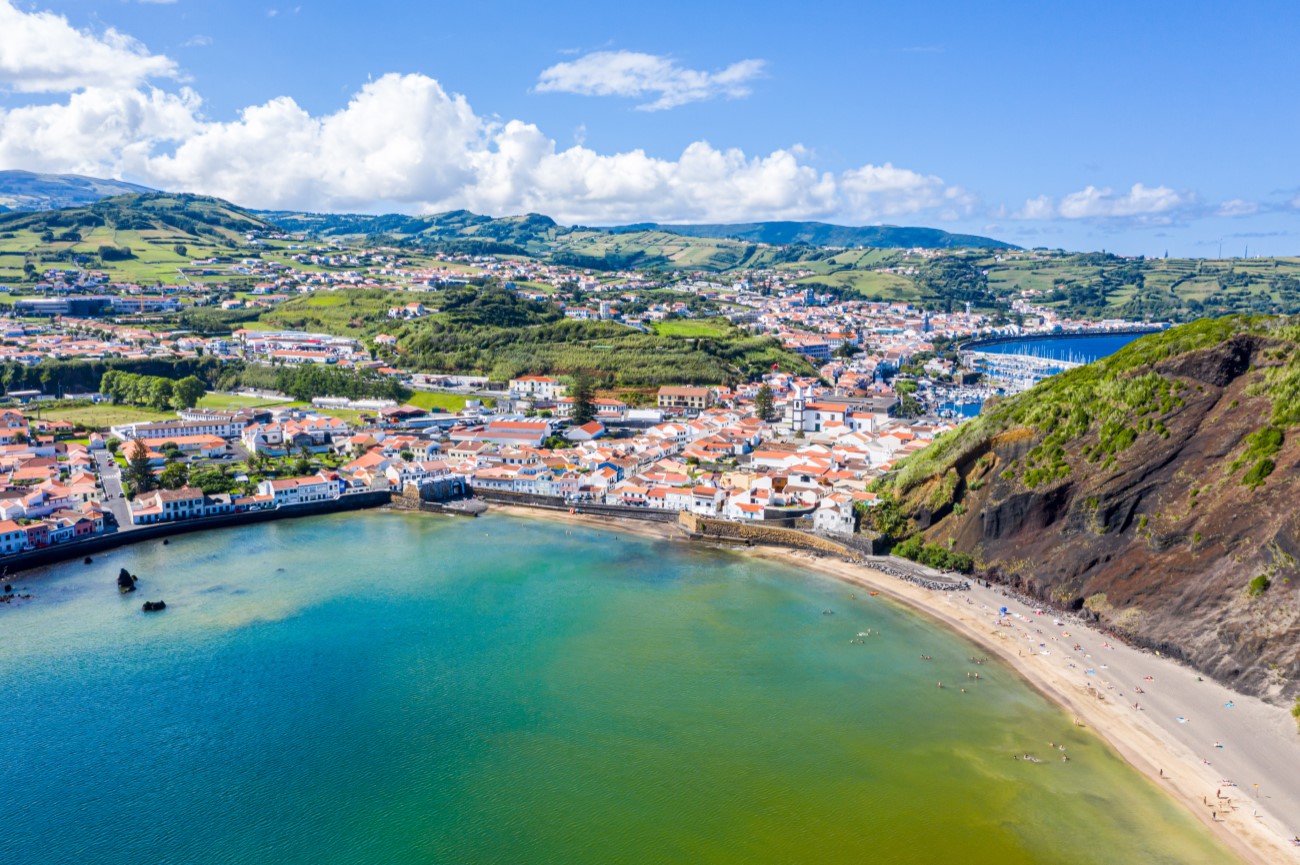
Horta concentrates services, the marina and Porto Pim; book transport for Caldeira and Capelinhos.
Pico and São Jorge
Both are viable with limited daily goals, well-located accommodation and taxis booked in advance.
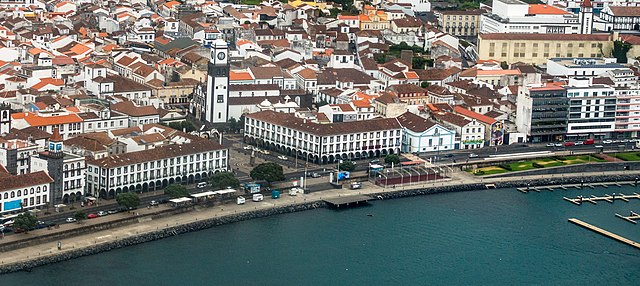
Where to stay without a car
Cheap accommodation outside the centre can become expensive if every meal requires a taxi. Compare walking distances to supermarkets, restaurants, terminals, the marina and tour pick-up points.
In Ponta Delgada, prioritise the centre or an area connected to your operators. In Angra, staying near the historic centre simplifies mornings and evenings. In Horta, the link between the marina, the centre and Porto Pim makes several transport-free days possible.
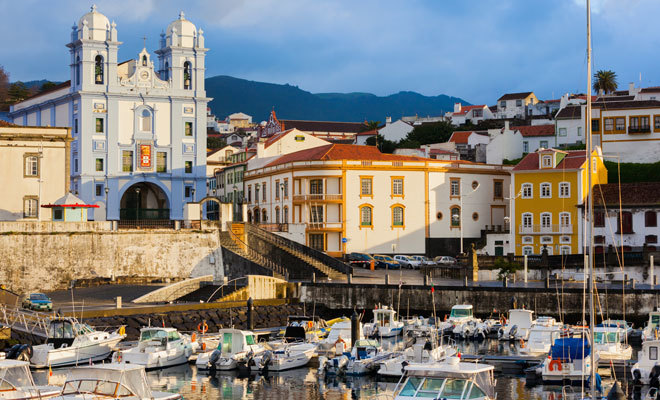
Buses: useful, but not enough for everything
Buses serve residents and connect towns, but they are not always designed for sightseeing with several stops in one day. Timetables can change by weekday, season and island.
Use public transport for linear journeys and confirm the final return service. A tour or taxi is usually more efficient for scattered lakes, trails and viewpoints.
Taxis, transfers and private drivers
Taxis let you organise half-day routes by area, share costs and stop where buses do not reach. Agree on the price, duration, waiting time and route before departure.
Transfers are useful for airports and activities. Do not assume international ride-hailing apps work in the same way on every island. Save local contacts and ask your accommodation for help.
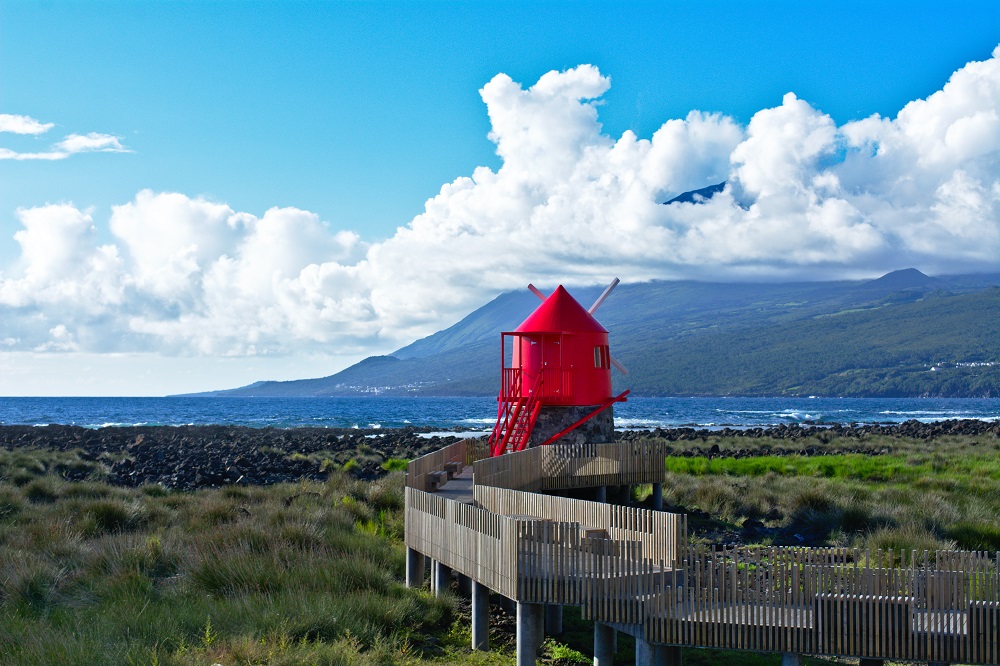
Organised tours: when are they worthwhile?
A tour provides transport, an efficient sequence of stops and local context. On São Miguel, Sete Cidades, Lagoa do Fogo or Furnas circuits can replace several taxi journeys. On Terceira, a full-day tour can cover both the interior and the coast.
Compare group size, language, meals, admission fees and the weather policy. Book with an identifiable operator and avoid choosing on price alone.
Affiliate links: we may earn a commission at no extra cost to you.
A 7-day car-free itinerary
A simple option is four nights in Ponta Delgada followed by three in Angra or Horta, connected by a domestic flight. On São Miguel, combine the city centre, a western tour, an eastern tour and a marine activity. On the second island, explore the town on foot and take one full-day island tour.
Do not schedule an inter-island flight and your international departure with a tight connection. If the budget does not cover taxis and tours, choose one island and explore it properly.
- Day 1: arrival and city centre on foot.
- Days 2 and 3: tours covering opposite parts of the island.
- Day 4: marine activity or flexible day.
- Day 5: connection to the second island.
- Days 6 and 7: town on foot and an island circuit.
Hiking without a car
The main challenge is often not reaching the trailhead, but returning from the finish. Look for circular trails, a dedicated transfer or a pre-arranged taxi. Never rely on finding spontaneous transport on a remote road.
Tell someone your route, carry an offline map and check the official trail status. If the weather changes, switch to an urban walk or an indoor activity.
How much does a car-free trip cost?
Add airport travel, tours, taxis, transfers and any premium for central accommodation. For one traveller, tours can compare well with rental, fuel and deposit costs; for a family or group, a car often becomes more efficient.
The real measure is cost per useful day. A car parked during two days of boat activities still costs money. Compare the complete plan before deciding.
Turn this guide into a realistic plan
Write down the main purpose of the trip and the limit you do not want to exceed. This might be reducing taxis, staying close to the sea, avoiding hotel changes or keeping within a total budget. That sentence helps rule out places that look attractive on a map but do not suit the real trip.
Then confirm islands, domestic flights, sea conditions and transport alternatives. Book secondary experiences only when those elements are clear. In the Azores, an efficient itinerary leaves room for weather and tiredness and does not depend on one attraction.
Planning 3, 5 and 7-day trips
3-day break
Choose one base and two priorities. Let the first day absorb the arrival, concentrate the main experience on day two and remain near the departure route on day three. Do not test several bases on a short trip: check-ins and luggage consume the time that looked available.
5-day trip
Add one tour, one nature day or a second area and keep at least half a day flexible. Five days let you alternate activity and rest and replace a weather-affected plan without removing the rest of the itinerary.
7-day holiday
Distribute three essential days, two complementary days and two lighter blocks. Repeating a beach, valley or town is not wasted time: it reduces transfers and improves the experience. Use two bases only when there is a clear geographical reason.
Budget: compare the total cost
The nightly rate is only one element. Add arrival transport, local travel, meals, admission, equipment and cancellation costs. Central accommodation may cost more while saving two taxis a day; an isolated house can be excellent for a group with a car and impractical for a non-driver.
Book scarce services first and leave locally available decisions until later. Read cancellation terms and do not confuse a non-refundable rate with an automatic saving. Flexibility has value when a trip depends on the sea, mountains or flight connections.
Safety and up-to-date information
Timetables, access, trails, roads and sea conditions change. Check official sources near the travel date and confirm again the day before. An old post or photograph does not replace signs, weather alerts or local instructions.
Save documents, addresses and bookings offline. Share plans for demanding activities and never force a stage simply to keep to schedule. Changing a route because of rain, heat, wind or snow is a responsible decision.
Travel with respect for the destination
Park only where permitted, take waste away, keep your distance from animals and respect private property. In historic centres and residential buildings, reduce noise and follow accommodation rules. Tourism is sustainable only when visits do not make everyday life worse for residents.
Choose identifiable operators, local businesses and experiences that explain the territory. Do not remove rocks, plants or other natural elements and avoid creating new trails. Taking a photograph does not require entering closed areas or blocking traffic.
Build car-free days by area
Group places that share the same service or pick-up point. An efficient day has one main journey and activities on foot at the destination. Linking three towns with different timetables increases the risk of missing the final service and leaves little time to explore.
Keep a taxi contact as a backup, confirm the final return and carry enough phone power. If a route needs two changes and a long walk with no sightseeing value, consider a tour or remove it from the plan.
Accessibility and luggage
Car-free travel is easier with light luggage and accommodation close to transport. Confirm lifts, floor level, gradients and the route between the stop and reception. Travellers with reduced mobility or a pushchair should request specific information rather than assume an urban route is level.
Mistakes that reduce trip quality
- Booking before checking logistics: turn maps, timetables and conditions into concrete decisions.
- Filling every day: keep room for rest and changes.
- Choosing by price alone: compare total cost and lost time.
- Ignoring recent reviews: services, noise and access can change.
- Depending on one experience: always prepare a coherent alternative.
Final checklist before booking
- Main goal and travel pace defined.
- Base chosen for logistics, not only for photographs.
- Transport or transfers confirmed.
- Seasonal activities checked with an official source.
- Cancellation, insurance and documents reviewed.
- One flexible block kept in the itinerary.
Quick decision
Without a car, choose one or two islands, stay in a central base and book nature days in advance. For a first trip, Ponta Delgada with organised tours is the simplest option; Angra and Horta are excellent walkable additions.
Frequently asked questions about visiting the Azores without a car
Can I visit São Miguel without a car?
Yes. Stay in Ponta Delgada and combine organised tours, taxis and urban travel.
Which is the best car-free island?
São Miguel for its range of services; Terceira and Faial for their practical urban bases.
Do buses reach the lakes?
Not always in a practical way for sightseeing. Check timetables and consider a tour or taxi.
Are ride-hailing apps available in the Azores?
Availability varies. Save taxi contacts and confirm local options.
Are organised tours worthwhile?
Yes, when they replace several transfers and group attractions that are far apart.
Can I hike without a car?
Choose circular trails or book transfers for the start and finish.
Where should I stay on São Miguel without a car?
Ponta Delgada is the most practical base for services and pick-up points.
Is travelling without a car cheaper?
It depends on the group and itinerary. Compare the total cost of tours and taxis with rental, fuel and deposit costs.
Sources and credits: information checked against official tourism, transport, weather and local authority websites. Real images from the AL Rental media library, with credits and licences linked to the original files.