



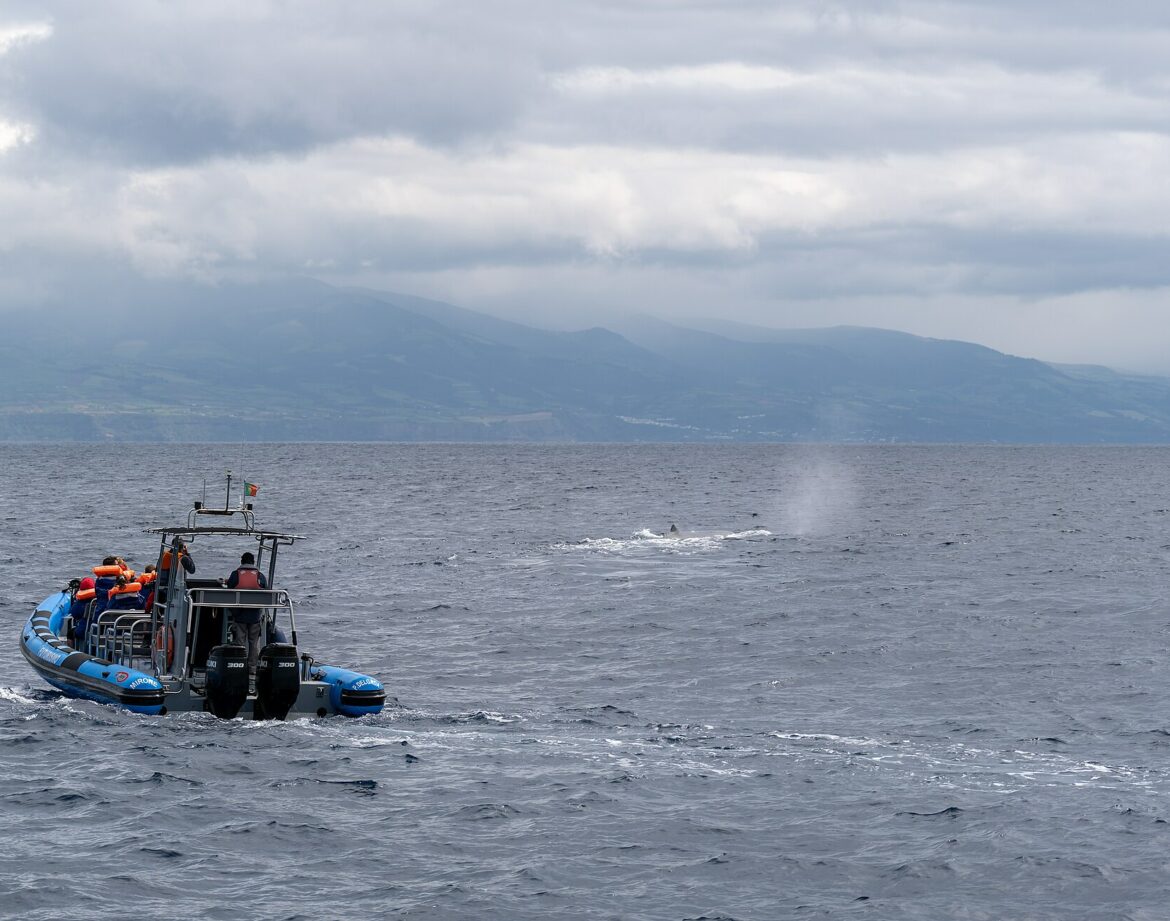
Whale watching in the Azores: islands, season and tour choice
The Azores went from whaling territory to an international destination for cetacean watching. Ground lookouts, biologists and crews search for animals in a living ocean, without guaranteeing species or proximity. This guide explains when to go, which island to choose, how to reduce seasickness and what signs distinguish a responsible experience from a simple race after a photo.
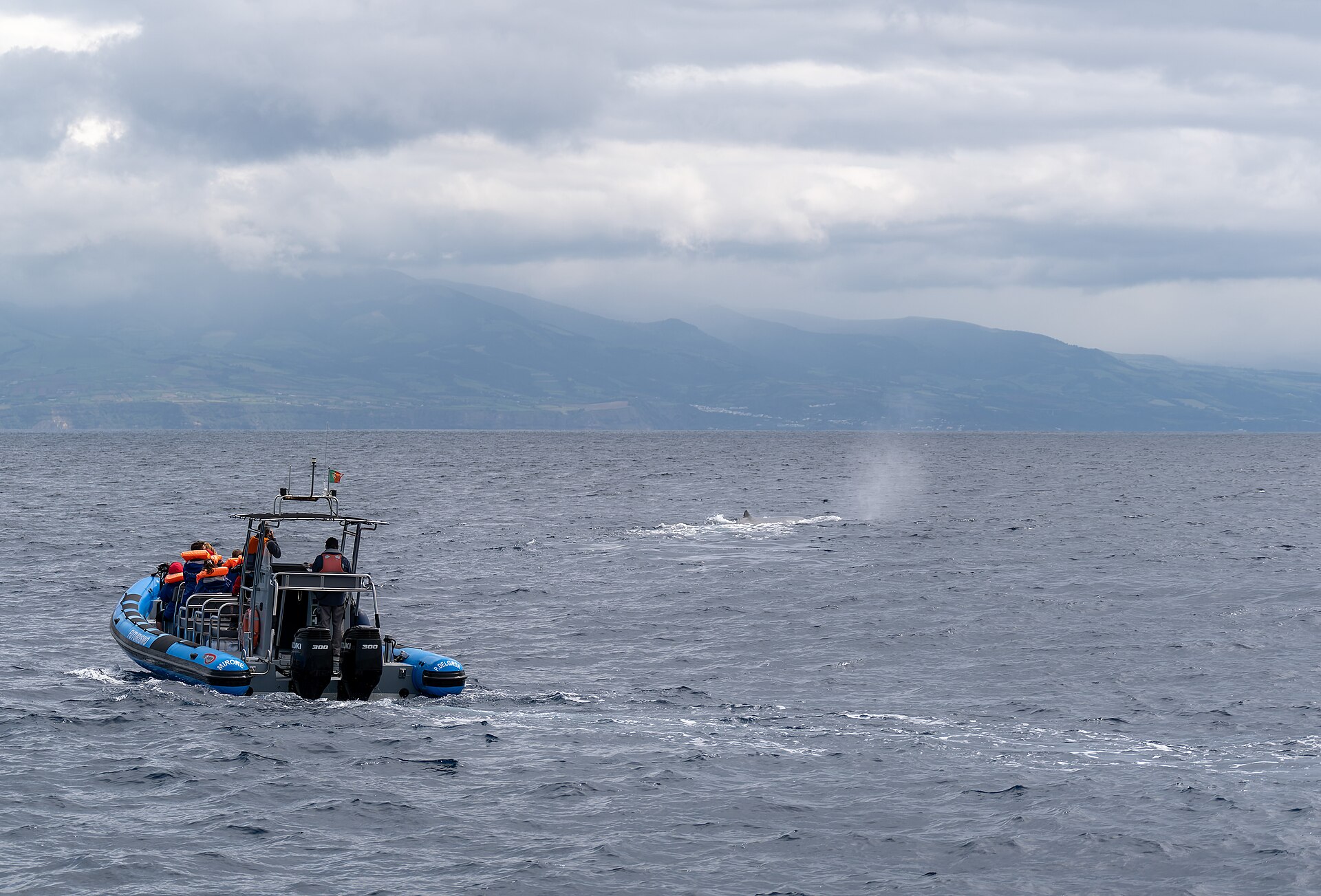
Why the Azores are special for observing cetaceans
The archipelago rises in the North Atlantic, surrounded by deep waters and migratory routes. Sperm whales and several species of dolphins can be observed at different times; Blue whales, common whales, sardine whales and other migratory species pass mainly in spring and early summer. Nature remains unpredictable. “Sighting rate” does not equate to a guaranteed whale, and a distant encounter may be ecologically better than an insistent approach. The experience includes reading the sea, birds, history and research. The former lookouts on land are part of the system: observers look for breaths and communicate with vessels. This heritage links current activity to the economic and cultural transformation of the islands.Best time: what changes throughout the year
Between March and June the possibility of large migratory whales increases, but the spring sea may cancel departures. In summer, the weather tends to be more stable and the supply is greater, with strong demand. Autumn maintains good opportunities and fewer visitors. In winter there are trips, but frequency and weather are more limited. Choose the season based on the trip as a whole, not by one species. Those who want trails and stable seas may prefer June or September. Big whale photographers may accept greater uncertainty in spring. Booking in the first few days of your stay. If the tour is cancelled, there will still be room to reschedule.Affiliate links: we may earn a commission at no extra cost to you.
Affiliate link
Which island to choose: São Miguel, Pico, Faial or Terceira
São Miguel offers a greater number of flights and operators, with departures from Ponta Delgada and Vila Franca do Campo. It's practical for the first trip. Pico and Faial have a strong maritime identity and allow you to combine a trip with whaling museums, vineyards and Pico Mountain. Terceira has operators and combines the sea with Angra do Heroísmo. Other islands may also offer departures, but less frequently. The best island is the one that fits into the itinerary and allows for two alternative days. Don't change islands just because of a predicted sighting. The animals are moving and the state of the sea weighs more than the previous day's rumors.- São Miguel: simple logistics and wide offer.
- Pico/Faial: strong maritime culture and Canal.
- Third: good combination with heritage.
- Book early but maintain weather flexibility.
How to choose a responsible operator
Confirms licensing, insurance, briefing, vests and presence of a guide with natural knowledge. It asks how the company acts when several vessels encounter the same group and whether it collects data for investigation. A responsible operator promises not to touch, chase or approach any species. Explain limits, reduce speed and abandon the meeting if the animals show changes in behavior. Regional legislation has regulated tourist observation since 1999. Cooperation between operators is essential to balance tourism, education and conservation.Affiliate link
Rigid or semi-rigid boat, morning or afternoon
Semi-rigids are fast and close to the water, but receive more impact and rarely have a bathroom. Larger vessels offer stability, shade and mobility, making them better for families, seasickness or physical limitations. The morning may have a more orderly sea, but there is no absolute rule. Choose by bulletin and logistics. Arrive early for the briefing and report pregnancy, back problems or mobility. Bring a windbreaker, sun protection, attached glasses and a waterproof bag. Even in August, the wind at sea cools down.Sickness, children, photography and expectations
Sleep well, avoid heavy meals and alcohol, keep your eyes on the horizon and follow medical advice about medication. Don't try a new drug without guidance. Sit in the area indicated by the crew. For children, confirm minimum age, duration and type of boat. A three-hour outing can be long. He takes extra clothes and explains that they might only see a blow or a distant back. In photography, use high speed and protect the equipment from water. Live the encounter first; just looking at the screen reduces the experience and encourages unrealistic expectations.How to Choose a Responsible Observation Company
Look for operators who explain the approach rules, keep their distance, limit time with the animals and change the route when the behavior of the whale or dolphin requires it. The presence of a biologist or specialized guide adds context, but it is also important how the crew manages expectations. No company can guarantee a wild species at a specific time. Questions about the type of boat, whether there is a bathroom, splash protection, policy for children and people with reduced mobility. Zodiacs are fast and close to the water, but require more balance; catamarans offer greater stability and space. People with back problems, pregnancy or impact sensitivity should ask for advice before booking.Sickness, clothing and photographic equipment
If you are prone to motion sickness, talk to a healthcare professional about prevention and follow instructions in advance. Sleep well, eat a light meal, avoid alcohol and stay where there is fresh air, looking at the horizon. Take a waterproof layer even in the sun: wind and splashes reduce the thermal sensation. Protect your cell phone and camera with a bag and use a strap. An intermediate lens is usually more practical than very heavy equipment on a moving vessel. Don't sacrifice safety or experience for a photo. Listens to the crew and keeps hands and material inside the boat during maneuvers.What to do if the sea cancels the departure
Safety cancellation is a positive sign, not a failure. Book the observation at the beginning of your stay to have days to reschedule. Maintains terrestrial alternatives nearby: whaling museums, viewpoints, interpretation centers and coastal trails help to understand the relationship between the islands and the ocean. Confirms whether the company offers a refund, new date or voucher and whether a departure without a sighting entitles you to a repeat. Policies vary. Save the terms and a local contact. A flexible itinerary protects your investment and reduces frustration caused by Atlantic weather.Which island to choose and how to integrate the activity
São Miguel has a greater offer and frequent departures from Ponta Delgada and Vila Franca do Campo. Pico and Faial allow you to combine observation with whaling heritage and crossings between islands, when the sea allows. Terceira also offers exits and a strong urban base in Angra do Heroísmo. The best choice depends not only on the desired species, but on connections, length of stay and ability to reschedule. Avoid arriving by plane and boarding immediately. Delays, luggage and tiredness create the risk of missing your departure. Book a night near the port before a very early time. After the activity, leave time to eat and recover, especially if there was a wave.Understand the sighting without chasing a list
Resident and migratory species vary throughout the year. Guides use lookouts on land, experience and communication between teams, but the ocean does not work like a theme park. Learn to recognize murmurs, dorsals and behavior instead of measuring the experience by the number of animals. A distant, calm observation may be more responsible than a long approach. Choose companies that integrate environmental education and, when possible, citizen science data. Do not ask the crew to approach beyond the rules. The best photography never justifies changing an animal's trajectory.Planning for families and people with reduced mobility
Children must understand that the exit can be long, cold and without immediate sightings. Bring dry clothes, water and a snack allowed by the operator. Confirm minimum age, vests and possibility of remaining seated. A catamaran may be more comfortable, but no boat completely eliminates movement. People with reduced mobility need specific information about the dock, ramp, steps and bathroom. Do not assume accessibility from a photograph. Contact the company and describe the specific need. For those who prefer not to embark, coastal lookouts, interpretation centers and whaling museums offer another way to learn about cetaceans and maritime history. Choosing the right experience for your group is more important than chasing the longest or quickest way out.Practical plan before booking
Operator
License, briefing, insurance and code of conduct.Boat
Choose stability or agility depending on the group.Expectation
Wilderness: No specific sightings are guaranteed.Experiences for your trip: São Miguel / Pico / Faial
Compare meeting points, times and inclusions before booking. Availability depends on your dates and local conditions.
Affiliate link
FAQ
When is the best time to see whales?
Spring and early summer favor migration; cetaceans can be observed all year round.What is the best island?
São Miguel is simple; Pico and Faial have a strong maritime culture; Third combines heritage.Is the sighting guaranteed?
No. Some companies offer new departure, but none can guarantee species or proximity.How long is the tour?
Normally between two and three hours, varying by port, boat and location of the animals.Can children participate?
Depends on age, boat and operator. Confirm before booking.How to avoid motion sickness?
Rest, light meal, horizon and medical advice when necessary.Is it possible to swim with whales?
It is not a normal tourist activity and observation follows strict rules.Does the tour harm animals?
Can cause impact if poorly handled; chooses licensed operators who respect distances and behavior.Choose a departure that fits your flights
When comparing tours, note the island, harbour and check-in deadline. Do not book a departure on another island just because it is labelled “Azores”. Keep your final morning free before a flight: a delay at sea could affect a connection the operator does not guarantee.